OVERVIEW
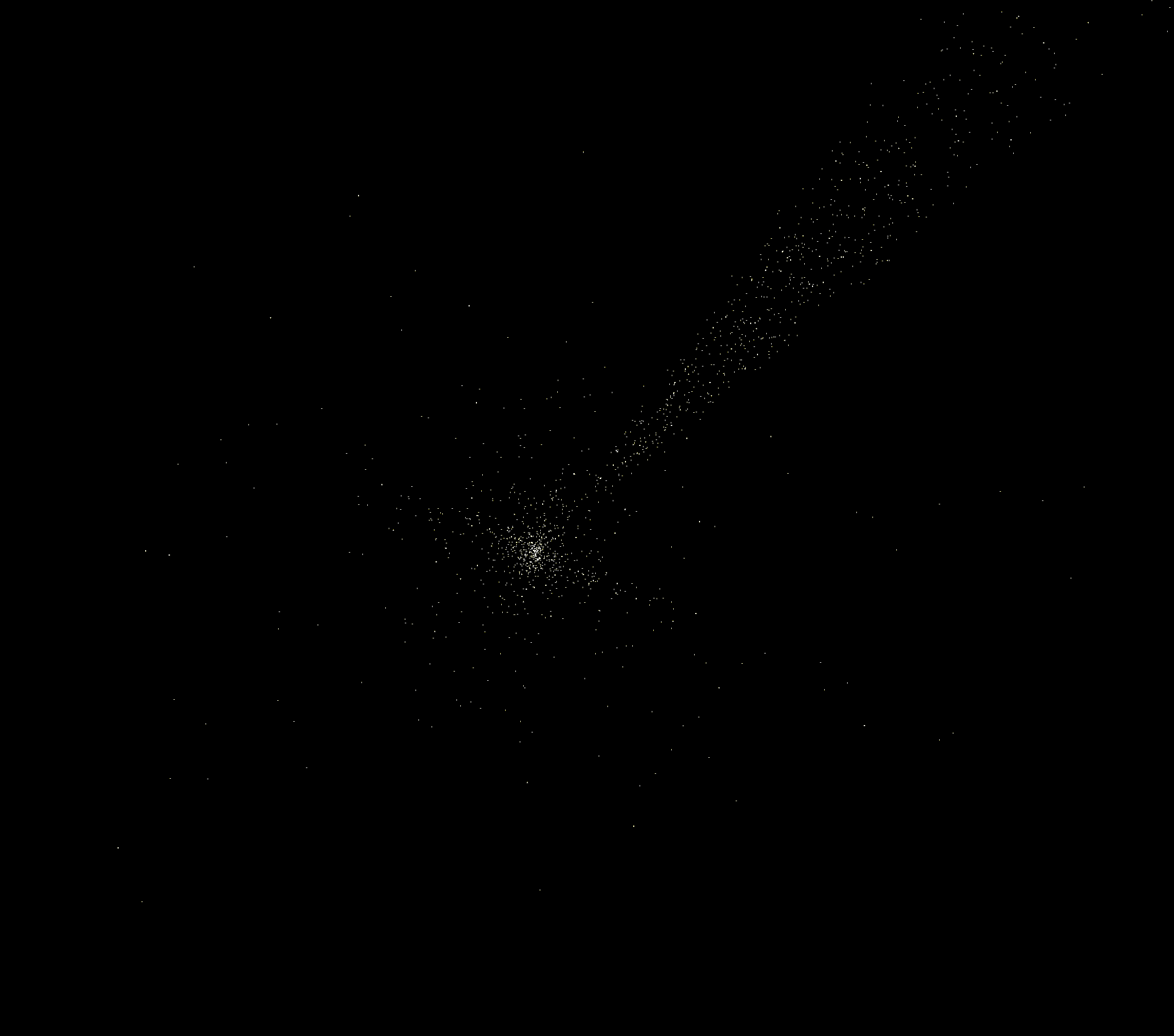
Each point of light represents a star system with a confirmed planet. The universe is teeming with worlds outside of our own. Data from the NASA Exoplanet Archive.
MOTIVATION
The main purpose is to capture and visualize how teeming with exoplanets our universe really is. To capture the wonder I first experienced looking at this data in a way that captures the imagination of a broader group of people than data alone can. When I first started becoming interested in studying exoplanets they were thought to be rare, but recently with improvements in sensing technologies we have discovered thousands. It is now estimated that more stars have exoplanets than not, which is truly incredible.
However, I also want to emphasize that despite all the planets we have discovered, so far the life on Earth is unique. Out of all these planetary systems, only ours has confirmed life and we need to be doing all we can to protect it.
TECHNICAL APPROACH
NASA publishes a public dataset containing data on every confirmed exoplanet at the Exoplanet Archive. From this data as a base I followed the general steps below:
- Create a pipeline that pulls the data from NASA Exoplanet Archive
- Convert RA, declination, and distance into x, y, z coordinates and scale distances with Python scripts
- Use Python script within Blender to plot objects in three dimensions for each star system
- Animate camera path in Blender
- Render finished animation into video
- (alt) Export the blender model as GLB file and host as a Three.JS webapp for interactivity
FURTHER INFORMATION AND LINKS
github repo: dalioshin/exo-planet
animation render on youtube: youtube/visualization